
Industry insights and trends
Digital Marketing: The Smart Way to Grow Your Business Online
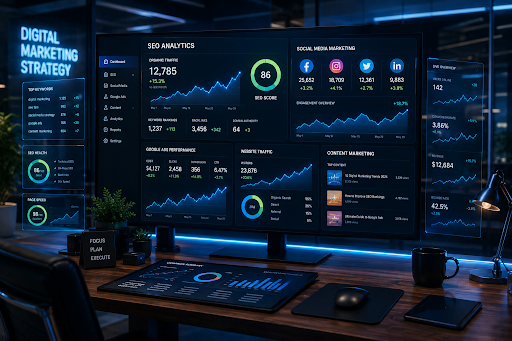 Discover how a strong digital marketing strategy helps businesses grow online — from SEO and social media to email, content, and paid ads.
Imagine opening a beautiful store in the middle of a desert. No traffic. No visibility. No customers. That is what running a business without digital marketing looks like today.
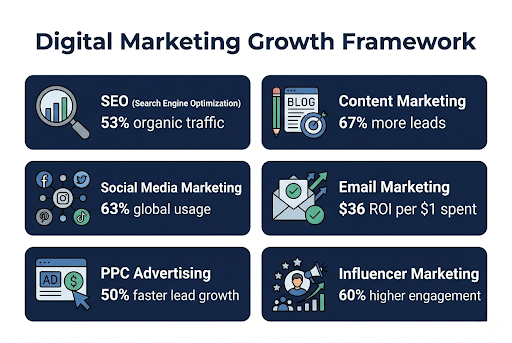
Over 5 billion people use the internet worldwide, and more than 63 percent of the global population is active on social media (DataReportal Digital 2024 report). People search, compare, read reviews, and make buying decisions online every single day. If your brand is not visible digitally, you are missing opportunities.
This guide explains how a strong digital marketing strategy helps businesses grow, which channels deliver real results, and how you can use simple methods to attract, engage, and convert customers.
1. What Is Digital Marketing?
Digital marketing is the promotion of products or services using online platforms like search engines, social media, email, and websites. It includes both free methods like SEO and paid campaigns like ads.
Big brands such as Amazon and Nike invest billions into online marketing every year. Why? Because digital channels provide measurable results. You can track clicks, conversions, revenue, and customer behavior in real time.
2. Why Every Business Needs a Digital Marketing Strategy
A digital marketing strategy is simply a plan. It answers: Who is your target audience? Where do they spend time online? What content do they consume? Which platforms bring conversions?
Without a strategy, businesses waste money. With one, every campaign supports long-term growth. For example, startups that align SEO, paid ads, and social campaigns together often see meaningful lifts in conversion rates within months.
SEO: Free Traffic That Lasts
When someone searches "best digital marketing agency near me," does your website appear? That is where SEO matters. SEO improves your website so it ranks higher on Google and other search engines.

Benefits include:
- Higher visibility on search engines
- Consistent website traffic
- Lower long-term marketing costs
- Stronger brand trust
PPC and Google Ads: Fast Results
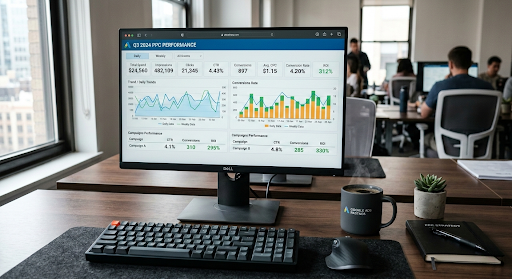
If SEO is a long-term investment, PPC is immediate. With Google Ads, your brand can appear at the top of search results within hours. Businesses use this for product launches, promotions, or local targeting.
- Immediate visibility
- Budget control
- Clear ROI tracking
- Audience precision
Many companies report that optimized PPC campaigns improve lead generation significantly within the first three months.

3. Social Media Marketing: Building Real Connections
People do not just scroll. They discover brands. Platforms like Instagram, Facebook, and LinkedIn allow businesses to interact directly with customers.
Why it matters
Social media marketing helps you share brand stories, launch new products, build community, and increase engagement. Brands that actively engage on social platforms typically see 20 to 40 percent higher customer loyalty rates.
To expand reach quickly, businesses use paid social ads, which allow detailed targeting by age, interest, and location.
4. Content Marketing: Educate Before You Sell
Modern buyers research before purchasing. That is why content marketing works so well. Blog posts, guides, videos, and case studies help answer questions and build authority.
5. Email Marketing: High ROI, Low Cost
Despite being one of the oldest forms of online marketing, email marketing still delivers powerful results.
You can use email to:
- Share offers and promotions
- Send product updates
- Nurture leads through the funnel
- Retain existing customers
Tools like Mailchimp make automation simple and accessible for businesses of all sizes.
6. Influencer Marketing: Trust Through People
Consumers trust people more than brands. That is why influencer marketing works so well. When trusted creators recommend a product, audiences listen.
Platforms like YouTube and TikTok drive strong engagement rates. Micro-influencers often generate higher engagement compared to traditional ads, which is why many brands now prioritize them over celebrity partnerships.
Digital Marketing Tools That Make It Easy
Managing campaigns becomes easier with smart digital marketing tools such as:
- Google Analytics — for tracking visitors and behavior
- SEMrush — for keyword research and SEO insights
- HubSpot — for marketing automation and CRM
These tools help measure performance and improve campaigns over time.
7. Should You Hire a Digital Marketing Agency?
Managing everything alone can be overwhelming. That is where a professional digital marketing agency becomes valuable. Agencies provide complete services, including:
- SEO planning and optimization
- Social media campaign management
- PPC and paid advertising management
- Content strategy and creation
- Email automation and lead nurturing
At Element Labs, we offer customized digital marketing services designed to fit your business goals. Whether you need SEO support, paid advertising, or full-scale marketing management, our team builds practical strategies that drive real results.
8. Common Digital Marketing Mistakes Businesses Make
Many businesses invest in digital marketing without having a clear strategy. They focus only on running ads while ignoring SEO, content quality, or audience targeting. As a result, campaigns fail to generate consistent traffic and conversions.
Another common mistake is not analyzing campaign data. Businesses often spend money on marketing but fail to monitor important metrics like conversion rates, click-through rates, and customer behavior. Using tools like Google Analytics and Search Console helps identify what is working and where improvements are needed.
9. Latest Digital Marketing Trends in 2026
Digital marketing trends are evolving rapidly as technology continues to advance. In 2026, AI-powered marketing automation, personalized content, voice search optimization, and short-form videos are becoming essential for brands that want to stay competitive.
Consumers now expect faster, smarter, and more personalized online experiences. Brands using AI tools for email automation, customer support, and content recommendations are seeing better engagement and higher conversion rates.
10. How to Measure Digital Marketing Success
Measuring digital marketing performance is important for understanding whether campaigns are delivering real business results. Key performance indicators such as website traffic, conversion rates, lead generation, and return on investment help businesses evaluate the effectiveness of their marketing efforts.
Tools like Google Analytics, Google Search Console, and SEMrush provide valuable insights into user behavior and website performance. Businesses can use this data to identify high-performing content, improve marketing strategies, and optimize campaigns for better results over time.
11. Local SEO for Small Businesses
Local SEO helps businesses attract nearby customers through search engines and Google Maps. When people search for services "near me," businesses with optimized local profiles are more likely to appear in search results. This is especially important for restaurants, agencies, clinics, and local service providers.
How to improve local SEO:
- Optimize your Google Business Profile
- Collect and respond to customer reviews
- Use location-based keywords in your content
- Build local backlinks and citations
A strong local SEO strategy helps businesses build trust, increase foot traffic, and generate more qualified local leads.
12. Final Thoughts
Digital marketing has become one of the most important factors for business growth in today's online world. From SEO and content marketing to social media and paid advertising, the right strategy helps businesses increase visibility, attract customers, and generate long-term revenue.
Unlike traditional marketing, digital marketing provides measurable results and allows businesses to reach the right audience more effectively. As online competition continues to grow, businesses that invest in smart digital marketing strategies will have a stronger advantage in the future.
At Element Labs, we help businesses build powerful digital marketing solutions designed for long-term success.