
The Startup Tech Stack in 2026: What to Build On When You're Just Starting
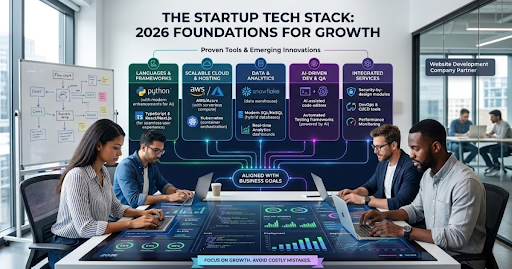
Choosing the right startup tech stack in 2026 is vital for founders aiming to build scalable, secure, and efficient products. From front-end frameworks to cloud infrastructure and AI integrations, the best tech stack startup choices can determine long-term success. This guide explores essential technology for startups and highlights how partnering with a reliable website development company can future-proof your digital foundation.
In 2026, the startup ecosystem is more competitive and fast-moving than ever. Investors expect lean, scalable products, while users demand fast, seamless digital experiences from the very first interaction. For modern founders, the challenge goes beyond simply launching a product; it’s about building it on a strong technology foundation that can support growth, innovation, and rapid iteration in a constantly evolving digital market.
Choosing the right startup tech stack in 2026 is a critical decision that shapes a startup’s future. From programming languages and frameworks to cloud infrastructure, APIs, and development tools, every technology choice influences performance, scalability, development speed, and long-term costs. The most successful startups aren’t chasing every new trend; they’re selecting a smart, scalable tech stack that aligns with their business goals and helps them build, launch, and scale faster.
Why the Tech Stack Matters for Startups
Your tech stack is more than a set of tools; it’s the DNA of your product. The wrong choice can lead to scalability issues, security vulnerabilities, or high maintenance costs. The right stack, however, enables the following:
- Faster development cycles
- Easier integration with third-party services
- Better user experience
- Lower infrastructure costs
- Long-term adaptability
For startups, where resources are limited, choosing wisely is essential. The technology for startups must balance innovation with practicality.
Front-End Technologies in 2026
The front-end is the user’s first impression, and in 2026, frameworks are evolving rapidly to meet demands for speed, scalability, and AI-driven personalization.
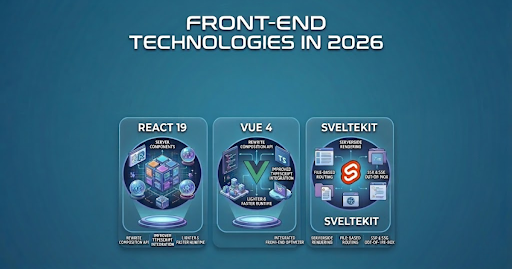
React 19
React 19 leads the front-end space with advanced server-side rendering (SSR) and AI-driven UI personalization. Its strong ecosystem, TypeScript compatibility, and integration with modern build tools make it a reliable choice. For startups building a startup tech stack in 2026, React offers long-term stability and scalability.
Vue 4
Vue 4 stands out as a lightweight, flexible framework with an easy learning curve. Enhanced reactivity and built-in micro-frontend support make it ideal for modular product design. With smaller bundle sizes and faster load times, Vue is a smart option for the best tech stack startup teams seeking agility.
SvelteKit
SvelteKit compiles at build time, eliminating the virtual DOM and delivering lightning-fast performance. In 2026, it offers robust routing, SSR, and seamless cloud integration. For startups aiming for simplicity and speed, SvelteKit is a powerful contender in the technology for startups ecosystem.
For mobile-first startups, Flutter 4 and React Native remain strong contenders, offering cross-platform development with native-like performance.
Choosing the right front-end framework ensures your startup tech stack 2026 delivers smooth, responsive experiences that users expect.
Back-End Technologies in 2026
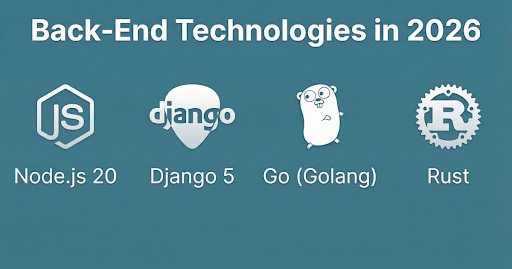
Node.js 20
Node.js 20 remains a favorite for startups thanks to its event-driven architecture and real-time capabilities. With enhanced performance and native support for ES modules, it’s ideal for scalable web apps. For founders building the best tech stack startup, Node.js ensures speed and flexibility.
Django 5
Django 5 offers a secure, high-level Python framework perfect for rapid development. Its built-in features, authentication, ORM, and admin panels, reduce setup time. Startups leveraging Django gain reliability and scalability, making it a strong choice in the technology for startups landscape.
Go (Golang)
Go is known for efficiency and simplicity, making it ideal for microservices and cloud-native applications. Its concurrency model supports high-performance systems without complexity. For startups aiming to scale quickly, Go is a powerful addition to the startup tech stack in 2026.
Rust
Rust is gaining traction for performance-critical applications, offering memory safety without sacrificing speed. In 2026, it’s widely adopted for fintech, gaming, and systems programming. Startups choosing Rust benefit from security and speed, ensuring their stack is future-proof.
Databases are equally important. PostgreSQL remains the go-to relational database, while MongoDB Atlas dominates the NoSQL space.
Selecting the best tech stack for a startup back-end ensures your product can handle growth without breaking.
Cloud Infrastructure & DevOps
No modern startup can ignore cloud infrastructure. In 2026, the leaders are:
- AWS: Still the most comprehensive, with AI-driven cost optimization.
- Google Cloud: Strong in machine learning integrations.
- Azure: Preferred for enterprise-focused startups.
For DevOps, Docker, Kubernetes, and serverless architectures are standard. Startups benefit from automation tools like GitHub Actions and Terraform, ensuring faster deployments and reliable scaling.
Partnering with a website development company experienced in cloud-native solutions can save startups months of trial and error.
AI & Emerging Technologies
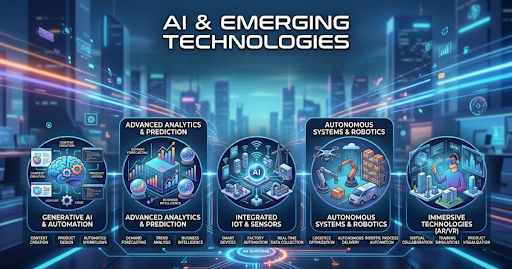
AI is no longer optional; it’s embedded in the technology for startups. In 2026, startups are leveraging:
- AI-driven analytics for customer insights
- Natural language processing for chatbots
- Automated code generation tools
- Predictive algorithms for personalization
Blockchain also continues to influence fintech and supply chain startups, while quantum computing is on the horizon for specialized industries.
Integrating these into your startup tech stack in 2026 can differentiate your product in crowded markets.
Working with a Website Development Company
Even with the best intentions, founders often struggle with technical decisions. A professional website development company can:
- Audit your tech stack for scalability
- Recommend frameworks aligned with your product goals
- Handle complex integrations
- Provide ongoing support and optimization
This partnership allows founders to focus on business strategy while experts manage the technical foundation.
Conclusion: Build Smarter with Element Labs
The startup tech stack of 2026 is more than just a collection of tools: it’s the foundation of your product’s success. From choosing the best tech stack startup frameworks to leveraging cutting-edge technology for startups, every decision shapes scalability, security, and growth.
At Element Labs, we specialize in guiding founders through these critical choices. As a trusted website development company, we help startups design, build, and optimize tech stacks that are future-proof and aligned with business goals.
Ready to launch with confidence? Partner with Element Labs today and let’s build the technology that powers your vision.